
Why does my horse’s coat look so yuk?!

I hope you find this blog post helpful! If you want a custom diet specific to your horse, click here.
P.S. We love AI, but this content is 100% human generated. 💕
Author: Dr Nerida McGilchrist | PhD Equine Nutritionist and Founder of My Happy Horse
I am quite sure it would be impossible to find an astute horse owner who doesn’t get a sense of satisfaction from seeing their horse’s coat glow! When you see them move and that sparkly coat just shimmers above their gorgeous muscles… that’s horse owner bliss right there!! 🤩
And as an astute horse owner, you’ve probably near pulled your own hair out trying to figure out why your horse’s coat looks plain yuk at times!
I have, many times over the years! So here are all the things I know that might be making your horse’s coat dull or bleached or dry and brittle or just plain yuk!
#1 – Change of season
I want to mention this one first because a change of season is when your horse’s coat is likely to look its worst, especially if you don’t rug!
By the end of a season, your horse’s coat, be it their wooly winter coat or their sleek summer coat, has done its job, been exposed to the elements for 3+ months and is essentially dead and preparing to fall out so it can be replaced by their new coat! All that taken into account, it is really no surprise that their coats will look a bit dull and rough right before seasons change.
So first thing to do, if you are on a journey to improve your horse’s coat, is check with yourself what time of year it is. And if you are in one of the change of season months (I find in my region, Tamworth, NSW, that it is August/September and February/March when my horses’ coats are a bit blah), you might only need to sit tight for a few weeks, do lots of grooming and you’ll have sparkly shiny again!
#2 – Nutrient deficiency
A bleached and generally lack lustre coat CAN be, and often is due to nutrient deficiency. Copper is the main culprit here. Australian pastures are notoriously low in copper and it is well recognised, in horses and cattle, that copper deficiency causes bleached out coats. It is particularly noticeable in chestnuts who go a burnt orange colour instead of being rich red, and in black horses who turn brown. Zinc is also important for skin and coat health as are a host of other nutrients including protein and the omega fatty acids. This makes a balanced diet THE most important requirement for beautiful coats!
#3 – Sun bleaching
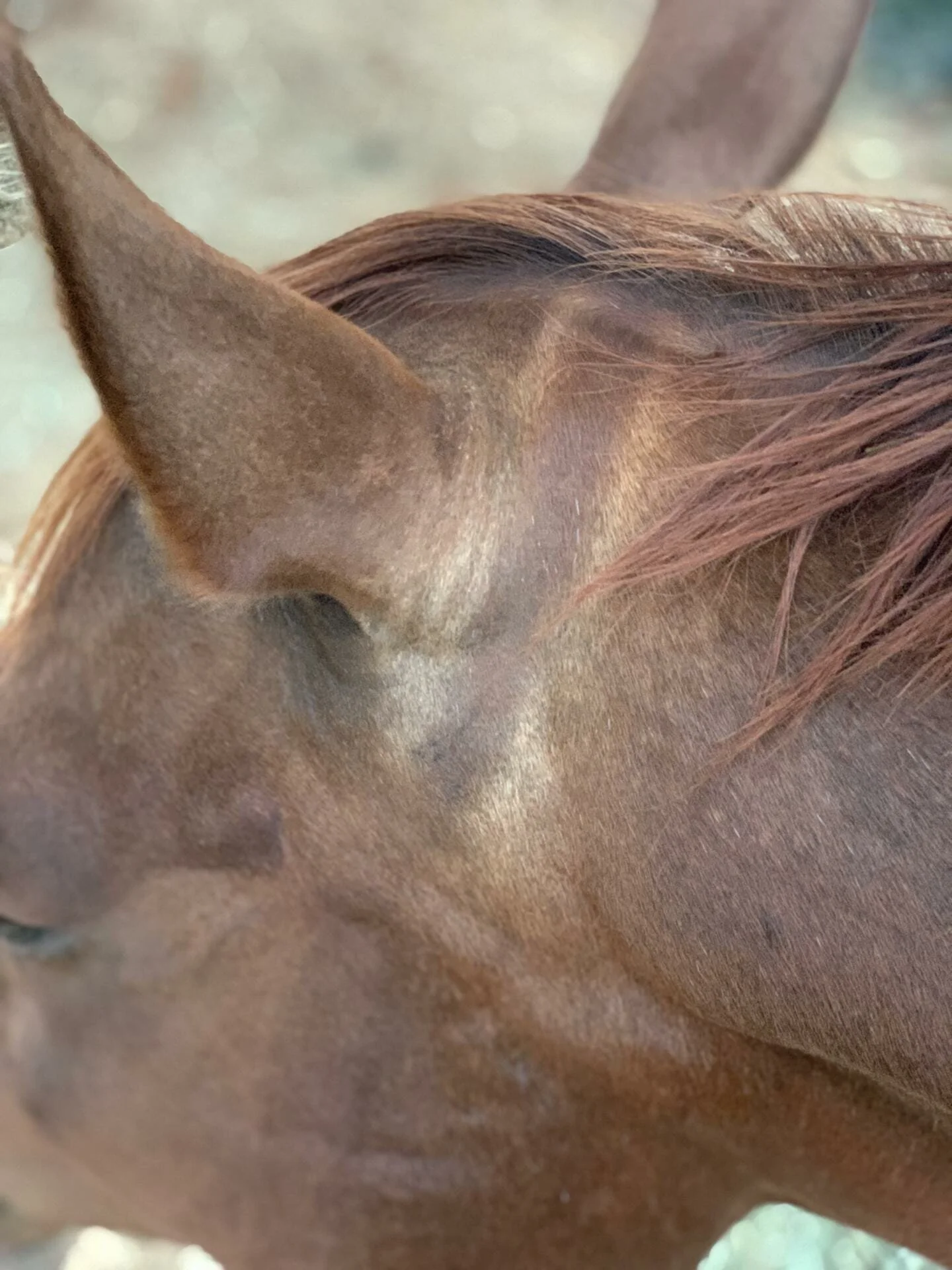
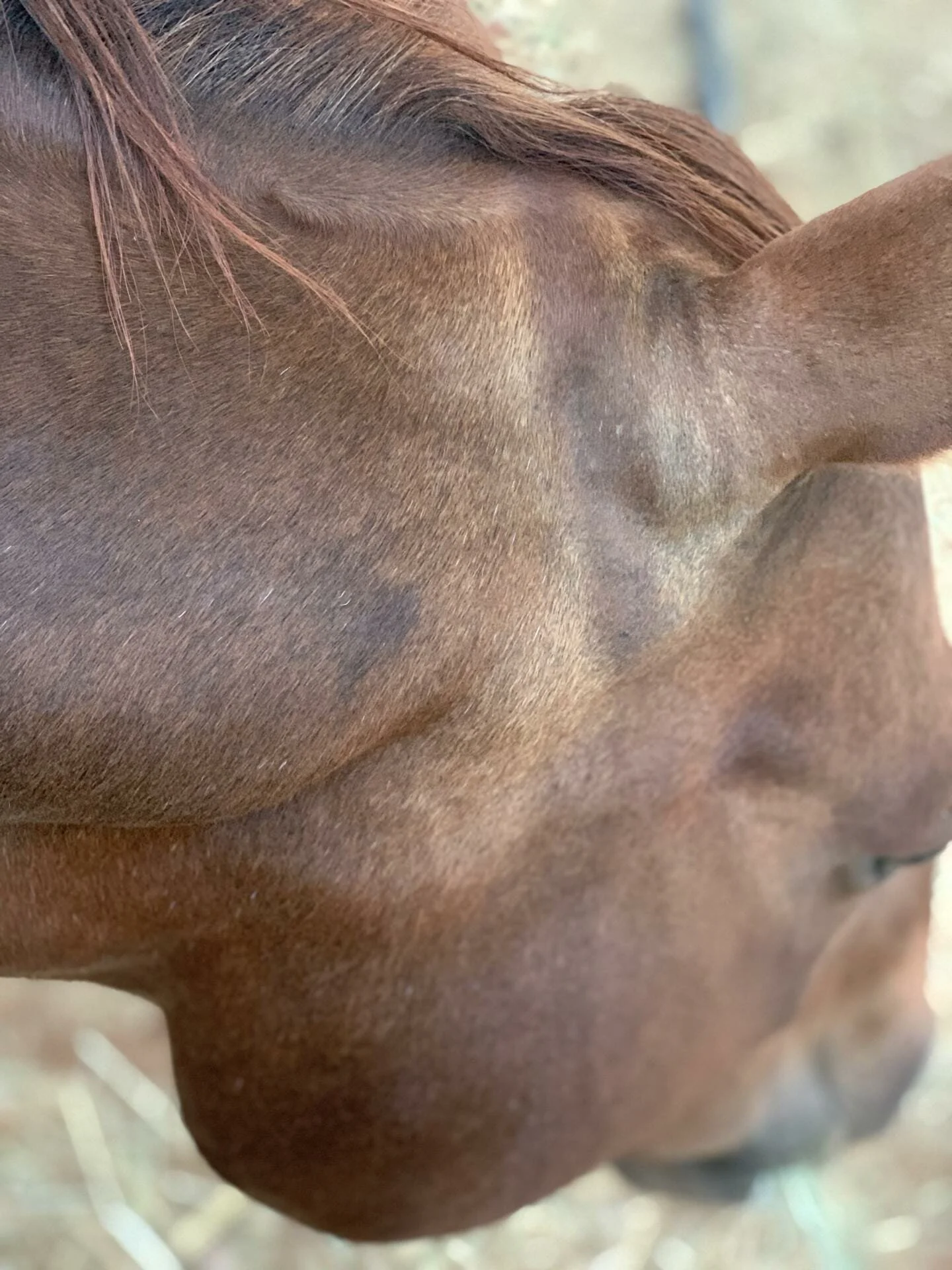
I struggled for years with my liver chestnut gelding, trying to figure out why his summer coat was less than perfect. He would go his glorious rich liver colour in spring. But then come the heat of our summers, and he would turn burnt orange. I knew his diet was meeting nutrient requirements including copper, and yet his coat sucked.
Then, he and I did a serendipitous experiment, and, in a particularly bad season for flies, left his fly mask on from the very start of spring, for weeks on end… and under the tiny little band that goes behind his ears, he stayed his beautiful liver colour! Leading me to conclude it is the combination of the salt from sweat and the sun that bleaches his summer coat! If he was a surfy, he’d have the coolest bleached blond hair! 😂
The tricky thing with this coat destroying combination is it doesn’t affect all horses! So it can make us think there is something wrong with the one or two bleached horses in our herds!
We have 4 dark brown horses… one, Allay, an OTTB who sweats a lot, bleaches really quickly as soon as hot weather hits, even with regular hosing (she is unrugged and exposed to the sun as she grazes)! The other 3 stay dark right through summer. And Popcorn, a light caramel coloured bay, will keep a gloriously soft and shiny coat regardless of how hot it gets and how much she sweats and stays out in the sun!
So if it’s not change of season, you know your horse is on a balanced diet and your horse spends considerable time grazing or out in the sun in hot weather, a poor coat may just be sunbleaching. A UV blocking summer sheet and plenty of access to shade will help!
#4 – Health challenges
There are genuine health challenges that will affect your horse’s coat health and it is very worthwhile being aware of them. Briefly, diseases like:
Secondary nutritional hyperparathyroidism, commonly known as bighead disease, which is a severe calcium deficiency caused by high oxalate warm season grasses;
Pituitary pars intermedia dysfunction (PPID), commonly known as Cushing’s disease, which is a condition that affects the pituitary gland, leads to a host of health issues and often causes a long, shaggy coat that doesn’t shed normally;
Gastric ulceration; and
Worm burdens, which cause malabsorption, protein leakage into the gut and the loss of nutrients due to the worms themselves stealing nutrition from your horse;
…will all cause many variations of yukky coats!
Do be warned however that a shiny coat does not indicate the absence of disease and a rough coat doesn’t indicate the presence of disease. You need to rule in or out the other causes of a rough coat before coming to conclusions and use management tools like gastroscopy and fecal egg counts (FEC) to stay on top of hard to spot issues like gastric ulcers and worm burdens!
#5 – Maybe it’s just dirt?
I find that our horses, who are unrugged 95% of the time (and love to be ‘at one with nature’ 🙈) can look a bit rough in the coat… but the reality is they are just dirty!
With a bath and an overnight rug to keep them clean in preparation for an outing, they look 100% better the next day! So it’s a good idea to wash and if you can, rug your horse every now and again to check their clean coat condition.
How to feed your horse for a glowing coat!
Having now hopefully helped you realise there are multiple reasons for yukky coats, here are some really quick tips on feeding for stunning coats!
Feed a properly balanced diet… use a virtual nutritionist app or nutrition calculator or ask your feed or supplement suppliers for help with balancing diets. A balanced diet is the foundation for coat health! If a common nutrient deficiency like copper is lurking in your horse’s diet, no amount of oils or washing and rugging and brushing is going to make that coat shine! A balanced diet ALWAYS comes first!
Feed for gut health! Gut health affects everything, so be sure to feed lots of forage, a big variety of forages and fibres, minimise grain and, with the exception of oats, never ever feed uncooked grains.
Add some oil to your horse’s balanced diet. I tend toward flaxseed oil for horses on higher grain diets (3 kg+ of grain or grain-based feed per day for a 500 kg horse) to bring in more omega 3, and toward canola oil for horses on near forage only diets for both Omega 3 and Omega 6 when I want to use oil to influence coat condition. For horses on smaller amounts of grain, or where cost becomes a consideration, you might like to use a blend of canola and flaxseed oils.
Manage diseases carefully. Work closely with your veterinarian to manage complex diseases like PPID and gastric ulceration, balance calcium levels in diets precisely to avoid bighead disease and use regular faecal egg counts and judicious worming to stay on top of worm burdens.
Provide access to plenty of shade, hose your horse off VERY well after work to remove salt from their coat and use light, UV blocking rugs during summer for horses who bleach in the sun.
Inner health, outer shine
A beautiful coat is usually a sign your horse is very healthy on the inside… meaning as a horse owner, it is worth pursuing a glorious coat because it is like our yardstick for the overall health of our horses.
Beware, a shiny coat isn’t always a true indicator of internal health, so keep your overall health management practices in good order.
And remember, balanced diet, balanced diet, balanced diet! It’s such an important aspect of overall health and critical for beautiful coat condition too!
For more information on feeding for amazing coats listen to the Happy Horse Nutrition Podcast, episode 28 – Feeding your horse for an amazing coat!
About the Author
Dr Nerida McGilchrist
Dr Nerida McGilchrist is an Australian equine nutritionist with a PhD and over two decades of experience. As the founder of Equilize Horse Nutrition, and advisor to some of the world's largest nutrition companies, she’s built an international reputation for blending science with practical solutions. Now, she’s bringing her expertise to My Happy Horse to make advanced nutrition accessible to all.
Get help assessing your horse's diet and building a balanced feeding plan. Download the MyHappy.Horse app and feed with more confidence.