
The Deadly Tale of Not Enough SALT!

I hope you find this blog post helpful! If you want a custom diet specific to your horse, click here.
P.S. We love AI, but this content is 100% human generated. 💕
Author: Dr Nerida McGilchrist | PhD Equine Nutritionist and Founder of My Happy Horse
Summer is coming! And with it, for some of us, so are HOT days and high humidity!
And the combination of these climactic factors puts significant pressure on our horses to stay cool.
Your horse’s primary method of cooling is evaporative cooling, which requires them to sweat. And in order to sweat, they need they need electrolytes.
Without enough electrolytes, they stop sweating and overheat. If they overheat, the results can be deadly. So it is critical that you make sure your horse has enough of the electrolyte minerals to get them safely through summer!
Here is how! And spoiler alert, in most cases it doesn’t require any expensive electrolyte supplements!
Your horse’s built in cooling system
As a warm-blooded creature, your horse needs to keep their body at a set temperature. In summer, when it is hot, and potentially also humid, your horse needs to actively offload heat so their body temperature doesn’t get too high.
If their body temperature does go above its normal set point, your horse’s metabolic processes will stop working, their gut will start leaking, and in extreme cases they will end up with multi-organ failure and death.
Luckily though, our horses have a brilliantly effective cooling system… sweat!
When they start to get hot, our horses sweat. The sweat wets their skin and then when air flows over their wet skin, the sweat evaporates, taking some heat from the horse with it. This loss of heat through evaporation allows them to keep their body at the correct temperature.
Ingredients for sweat
In order to sweat, your horse needs water and electrolyte minerals. If your horse runs out of one or the other of these ingredients, they will sweat less or stop sweating all together, putting them at extreme risk of overheating!
Water
The simple rule for water in summer is to make sure your horse has constant access to fresh water that is so clean, you would be happy to drink it! Where possible, keep your horse’s water in the shade so it stays cool or refresh and change it often.
The electrolyte minerals
There are 3 major electrolyte minerals in your horse’s sweat; potassium, sodium and chloride. In every litre of sweat, there is approximately 1.5 to 2.3 grams of potassium, 2.5 to 3 grams of sodium and 4.5 to 6.4 grams of chloride.
In summer, your horse can lose 10 litres of sweat, or more, just standing around doing nothing other than trying to stay cool. Meaning a horse, at rest, is losing around 85 to 117 grams of electrolyte mineral per day! It’s a lot of mineral… you’d need both your hands cupped together to hold that much!
Then, if you add in some work in hot conditions, your horse can lose as much as 10 litres of sweat per hour of work! That’s another 100ish grams of electrolyte mineral!!
And here is the thing… your horse does not have a store of sodium, potassium or chloride in their body. What they are sweating out in electrolyte each day needs to be replaced, daily, in their diet!
If it is not replaced, your horse risks electrolyte deficiency, dehydration (because they don’t drink enough when they are short on electrolytes), reduced capacity to sweat and overheating!
Where do these electrolytes come from?
If you are starting to think ‘if I added that much electrolyte supplement to my horse’s diet, they would never eat it’, you are absolutely correct (in most cases).
But here is the thing… potassium is ABUNDANT in your horse’s natural diet. So mostly what you need to provide is sodium and chloride, and together, they are just plain ol’ table salt.
Let’s look at the electrolyte minerals in a bit more detail!
Potassium
Forages are RICH sources of potassium. Even the most plain looking, unimproved pastures or low-quality hay will typically contain enough potassium to meet your horse’s elevated potassium requirement in summer!
Most pasture and hays sit somewhere around 18 to 25 grams of potassium per kg of dry matter. A 500 kg horse eating 2% of their bodyweight (10 kg) in forage per day will therefore get 180 to 250 grams of potassium per day.
A horse sweating 10 litres of sweat over the course of a day to stay cool, and another 10 litres during work per day, needs around 46 grams of potassium… meaning as long as your horse is getting enough forage, they will get PLENTY of potassium to meet their requirement, even in very hot and humid climates.
The key though is that they need to be getting enough forage! More on this in a moment.
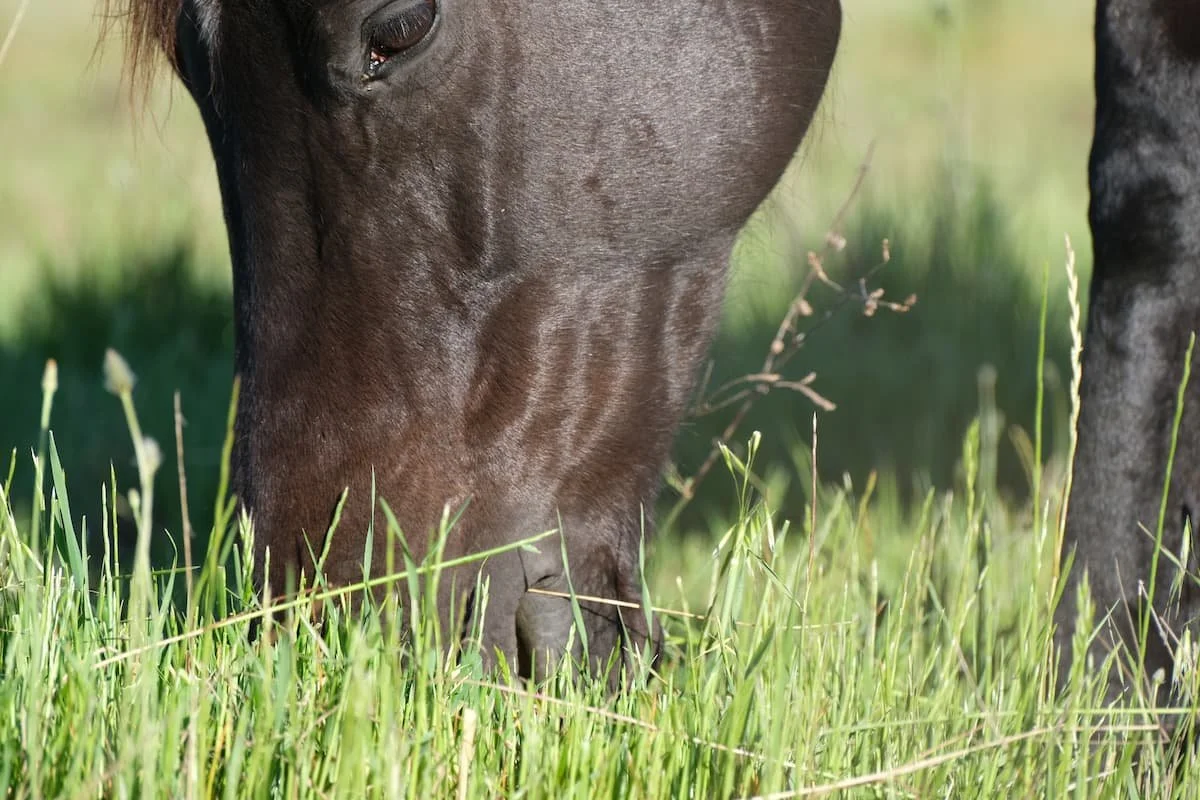
Lush green pastures are always higher in potassium than dry, brown pastures.
Sodium and Chloride
Sodium and chloride together are just salt! The same salt we put on our hot chips, the same salt we use in our swimming pools, the same salt we throw in a boiling pot of pasta.
Here is the most important thing you need to do for your horses in summer…
Give them constant access to loose rock salt!
Horses in hot, humid climates need around 70 grams of salt per day. If doing one hour of work per day, they need an additional 70 grams of salt. It is handfuls of salt!
Most horses won’t eat this much salt, AND the amount of salt they actually need will vary from day to day. For example if you have a rainy day when their skin is wet from rain and they don’t need to sweat, their need for salt will be lower on that day. Or if you don’t ride your horse every day, their requirement for salt on days they are not ridden will be lower than it is on days they are ridden.
And this lower requirement will change their appetite for the salt… meaning if you try to put the same (huge) amount of salt in their feed every day, they will likely stop wanting to eat their feed because it will be too salty!
Luckily though, horses have a drive to eat salt when they need it. So the solution to this pickle of their ever-changing-requirement-for-salt, is to put the amount of salt they will happily eat daily, into their feed, and then give them access to free choice, loose rock salt, so they can eat the amount they need day to day.
If you are in a hot and humid climate and your horse doesn’t have access to free choice salt, you need to get that sorted as quickly as humanly possible!
If your horse stops sweating!
If your horse stops sweating it is important to remember that this is not an indication your horse has acclimatised to the heat. Instead, it is a warning sign that your horse has run out of electrolyte and/or is dehydrated and you need to fix the problem fast!
If your horse is not sweating normally, check their water to make sure it is clean and there is nothing physically preventing your horse from drinking.
And then, assess their electrolyte intake, making sure to be sure your horse is getting plenty of forage (absolute minimum of 1.5% of their bodyweight per day) and that they have free choice salt available!
What about electrolyte supplements
Feed and saddlery store shelves are brimming with electrolyte pastes and powders and these do have a role to play. Horses in hard work often need help rapidly replacing electrolytes they lost in sweat so they can drink enough water to fully rehydrate. Once fully rehydrated, they can also replenish muscle energy stores and recover fully from their work.
Do be mindful that there are lots of electrolyte supplements that contain very little actual electrolyte. Look for products with the optimum amounts of sodium, chloride and potassium shown in Table 1.
| Electrolyte Mineral | Optimum Amount (%) | Optimum Amount (g/kg) |
|---|---|---|
| Sodium | 20 – 25 | 200 to 250 |
| Chloride | 43 – 48 | 430 to 480 |
| Potassium | 12 – 15 | 120 to 150 |
Table 1: Optimum amounts of electrolyte mineral in well formulated electrolyte supplements.
Staying cool!
Staying cool in summer is critical for your horse as overheating has many negative consequences for their health, and if severe enough, can be deadly. Abundant cool, clean, fresh water, plenty of pasture and/or hay and access to free choice salt give your horse the ingredients they need to sweat effectively so they can stay cool and safe!
For more information on salt and electrolyte supplements, listen to the Happy Horse Nutrition Podcast, Episode 21 - Does my horse need a supplement?
About the Author
Dr Nerida McGilchrist
Dr Nerida McGilchrist is an Australian equine nutritionist with a PhD and over two decades of experience. As the founder of Equilize Horse Nutrition, and advisor to some of the world's largest nutrition companies, she’s built an international reputation for blending science with practical solutions. Now, she’s bringing her expertise to My Happy Horse to make advanced nutrition accessible to all.
Get help assessing your horse's diet and building a balanced feeding plan. Download the MyHappy.Horse app and feed with more confidence.