
Preventing Nutrition Based Disease During Drought

I hope you find this blog post helpful! If you want a custom diet specific to your horse, click here.
P.S. We love AI, but this content is 100% human generated. 💕
Author: Dr Nerida McGilchrist | PhD Equine Nutritionist and Founder of My Happy Horse
Last month, we covered the most important priorities when feeding during drought, which are; 1. to keep horses physically and mentally healthy by providing LOTS of forage in the form of hay and other types of fibre or forage; and 2. to meet your horse’s need for nutrients.
Essentially, you need to fill them up, keep them chewing and keep their weight on!
This however is only part of the picture when it comes to drought feeding. Your next priority when feeding during drought is to prevent the diseases that drought increases the risk of.
The main disease concerns during drought, from a nutritionist’s perspective, are gastric ulcers, ‘sand colic’ and colic in general.
Let’s look at each of these briefly and cover some practical things you can do right now to help prevent them!
Gastric Ulcers
Longer periods of time with empty stomachs during drought put horses at a significantly increased risk of gastric ulceration and particularly equine squamous gastric disease (ESGD).
ESGD or squamous gastric ulcers, are the ulcers that occur in the top part of the stomach.
These ulcers are caused by the acid from the bottom of the stomach, splashing or squeezing up to the top part… where it then literally burns holes through the lining of the stomach.
This ‘acid splash’ happens any time your horse’s stomach is empty.
Empty stomach = squamous gastric ulcers
The bottom part of a horse’s stomach secretes acid 24/7. The bottom of the stomach also secretes a thick, sticky mucous to protect itself from its own acid.
But the top of the stomach has no such protection.
Instead, the horse relies on the saliva created when chewing forage, to dilute and neutralise the acid, making it less likely to burn holes through the stomach lining.
AND they rely on the forage itself creating a physical barrier to stop the acid from splashing.
Between the saliva and the forage, acid is rendered less harmful and is kept physically in place in the bottom of the stomach, where it should be.
During drought, with horses that are relying on hay for their forage, they can, and often will eat their daily hay allocation quite quickly, meaning they often spend long periods of every day not eating…
Which means their stomach will often be empty, with a pool of very low pH acid in it (because there is not enough saliva to dilute and neutralise it), putting your horse at high risk of ulceration.
Preventing squamous ulceration
To prevent this ulceration, you need to find ways to keep them chewing, salivating and their stomachs full so the acid can’t ‘splash’.
The best way to do this is to extend the amount of time it takes your horse to eat their hay each day. The longer you can have them eating, the more time they spend chewing and salivating and the less time their stomach will be empty!
Small hole hay nets for small and large bales of hay, hay bags and hay balls are all excellent options for extending the time it takes your horse to eat their hay.
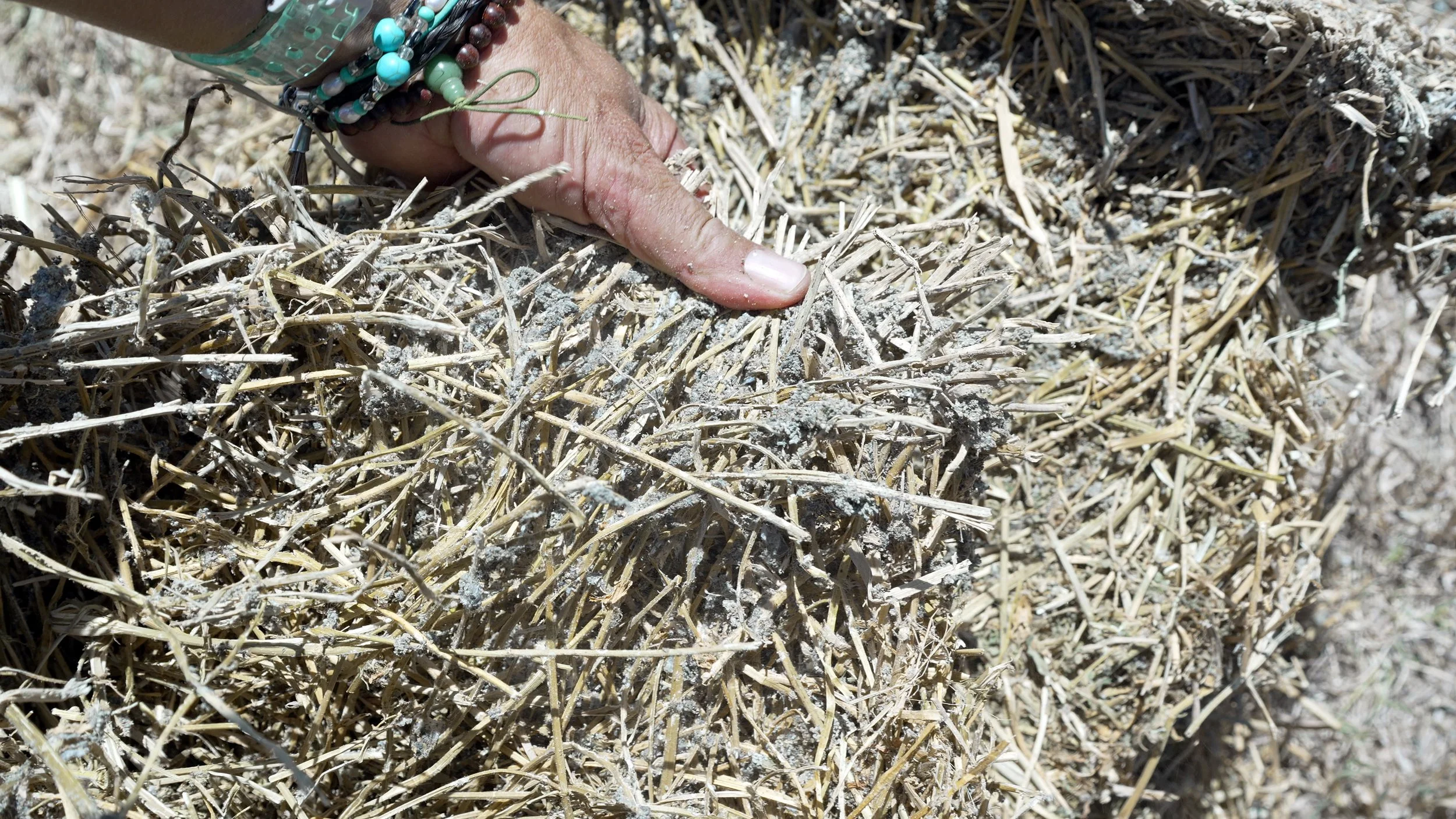
AND provide constant access to straw. With straw always available, there will always be some forage they can go and chew on whenever their stomach is starting to empty!
As a general rule, you should try to avoid your horse going any longer than 4 hours without forage. With a hard rule to never let your horse go longer than 6 hours without forage to chew.
Sand Colic
Bare ground and restricted forage intakes during drought increase the risk of sand and dirt accumulating in the gut.
As grazing animals, horses normally eat a lot of dirt! A recent study by Jurjanz et al 2021 estimated an intake of more than 0.5 kg of soil per day!!
And normally this isn’t an issue… because all the fibre going through their gut just picks up all that dirt and moves it out.
But during drought, two things change…
First, the amount of sand or dirt a horse eats will increase because they are often eating hay off bare ground AND they will usually pick around in the dirt to find whatever dropped feed, roots or leaves they can munch on, eating a bunch of soil in the process.
AND second, when pasture is no longer available and hay is limited, your horse’s fibre intake is reduced. So there is less fibre to shift the dirt out of the gut.
MORE DIRT IN + LESS DIRT OUT = sand or dirt ACCUMULATING in the gut! …
And when it accumulates, it can cause irritation to the gut wall, which frequently leads to diarrhea and sometimes leads to colic.
I find in the early stages of sand or dirt accumulation in the gut, horses just become IRRITABLE and GRUMPY, presumably because they are in pain. So keep an eye on your horse for changes in behaviour as it *may* be an early sign of trouble brewing in the gut.
Preventing ‘sand colic’
Prevention is better than cure, so, first things first, try to limit the amount of dirt your horse is eating by feeding hay off or from nets above surfaces like black rubber matting that you can sweep or blow dirt off regularly.
Then, feed as much hay as your hay supply allows. The more hay you can move through your horse’s gut, the less chance they have of sand and dirt accumulating in there.
Finally, you can feed psyllium husk. When it gets wet, psyllium turns into a gooey, gluggy gel, which helps to collect up sand and dirt and remove it from the gut. Feed it at a rate of 1 gram per kg BW/day (500 grams per day for a 500 kg horse) for 5 days in every month.
Be warned, psyllium is inherently unpalatable, so mix it with some JUST DAMP favourite foods for your horse. DO NOT WET the psyllium too much or it will turn into a gluggy mess that your horse definitely won’t eat!
Alternatively, you can use a commercial psyllium pellet that is designed specifically for sand and dirt removal. There are good ones on the market that also include magnesium sulfate to make the process more effective! And your horse may find them more palatable.
If your horse HAS sand colic or other symptoms like diarrhea, you will need to work with your veterinarian to use a combination of psyllium husk and magnesium sulphate to help shift the sand or dirt that has accumulated in your horse’s gut.
General Colic
Drought also increases the risk of many other forms of colic.
Changing hay, poor quality hay, drinking from dams with poor water quality and high intakes of grain based hard feeds are four known risk factors for colic.
During drought, these risk factors are all more common.
Preventing colic
Here are some ways to prevent colic during drought:
Introduce new hay into the diet as slowly as possible.
Try not to change hay sources abruptly. Whenever possible, as you are running out of one supply, try to source your new supply and introduce it slowly as you finish up your horse’s previous hay.
Buy the best quality hay you can find and avoid mouldy hays.
Read Feeding in Drought, Part 1 for details.
Feed a variety of different hays
A variety of hay (e.g. lucerne, oaten and mixed grassy hay fed all at the same time) creates fibre variety in the diet. Fibre variety then creates fibre diversity and this, in turn, creates microbe diversity in the hindgut. A hindgut with a diverse population of microbes is more stable and reduces the risk of colic.
Provide access to clean water
If your horse is watered from a dam with poor water quality, provide an additional source of water so your horse can choose where it drinks. If the water quality in your dam is very poor, fence the dam off so your horse can’t access it.
Don’t feed too much grain
While droughts often force our hand with what we need to feed, to minimise the risk of colic, never exceed 1 kg of grain based hard feed per 100 kg of bodyweight, which is 5 kg/day for an average sized 500 kg horse.
And! with the exception of oats, never feed raw grains.
Thriving in drought
While feeding enough is your most important drought feeding priority, feeding through drought isn't just about keeping weight on—it's also about preventing the diseases that drought makes more likely.
By keeping stomachs full, minimising sand and dirt intake, and reducing common colic risks, you give your horse the best chance of staying happy and thriving through these tough times.
Want to learn more about feeding your horse in drought?
Listen to episode #7 of the Happy Horse Nutrition Podcast: Drought Feeding for Horses, Part 2
About the Author
Dr Nerida McGilchrist
Dr Nerida McGilchrist is an Australian equine nutritionist with a PhD and over two decades of experience. As the founder of Equilize Horse Nutrition, and advisor to some of the world's largest nutrition companies, she’s built an international reputation for blending science with practical solutions. Now, she’s bringing her expertise to My Happy Horse to make advanced nutrition accessible to all.
Get help assessing your horse's diet and building a balanced feeding plan. Download the MyHappy.Horse app and feed with more confidence.